
Reading the Label: Understanding Which Ingredients to Avoid with SIBO and Why

Key Takeaways
Many packaged foods promoted for digestive health contain added ingredients that may increase symptoms in some people with SIBO.
The ingredient list is often more useful than front-of-package marketing claims for understanding what a food actually contains.
Recognizing a few common ingredient categories can help you quickly evaluate packaged foods without memorizing long ingredient lists.
Individual responses to foods vary, so the goal is to identify the products and ingredients that work best for you.
Grocery shopping after a SIBO diagnosis can feel confusing.
Knowing that diet plays an important role in managing SIBO, food packages advertising products as “gut healthy,” “supports digestive health,” or “high fiber” might seem like a good choice. Many of these products contain added fibers, prebiotics, and sugar alternatives because they are designed to support digestive health or increase fiber intake. While these ingredients can be beneficial for many people, they may temporarily increase gas, bloating, or other digestive symptoms in some individuals with SIBO.
Fortunately, you do not need to memorize long lists of ingredients or avoid every packaged food. Learning to recognize a handful of common ingredient categories can make reading food labels much easier and help you make more informed choices while managing your symptoms.
Ignore the Marketing and Turn the Package Over
The front of a package is designed to highlight a product’s benefits. Claims such as “supports gut health,” or “made with plant-based ingredients” could be true, but should not be the way you evaluate a product.
Instead, turn the package over and read the ingredient list.
Many packaged foods contain ingredients that are added to increase fiber, nourish beneficial gut bacteria, improve texture, or reduce added sugar. For most people, these ingredients can be part of a healthy diet. However, some of these same ingredients are highly fermentable, meaning they provide fuel for bacteria. For people with SIBO, that extra fermentation may temporarily increase gas production and contribute to symptoms such as bloating, abdominal discomfort, or changes in bowel habits.
As you scan the ingredient list, ask yourself a few simple questions:
Does it contain added fibers?
Does it contain sugar alcohols?
Does it contain ingredients you already know trigger your symptoms?
Let’s unpack which ingredients in a product often signal added fibers or added sugar alcohols.
Ingredient Categories to Recognize
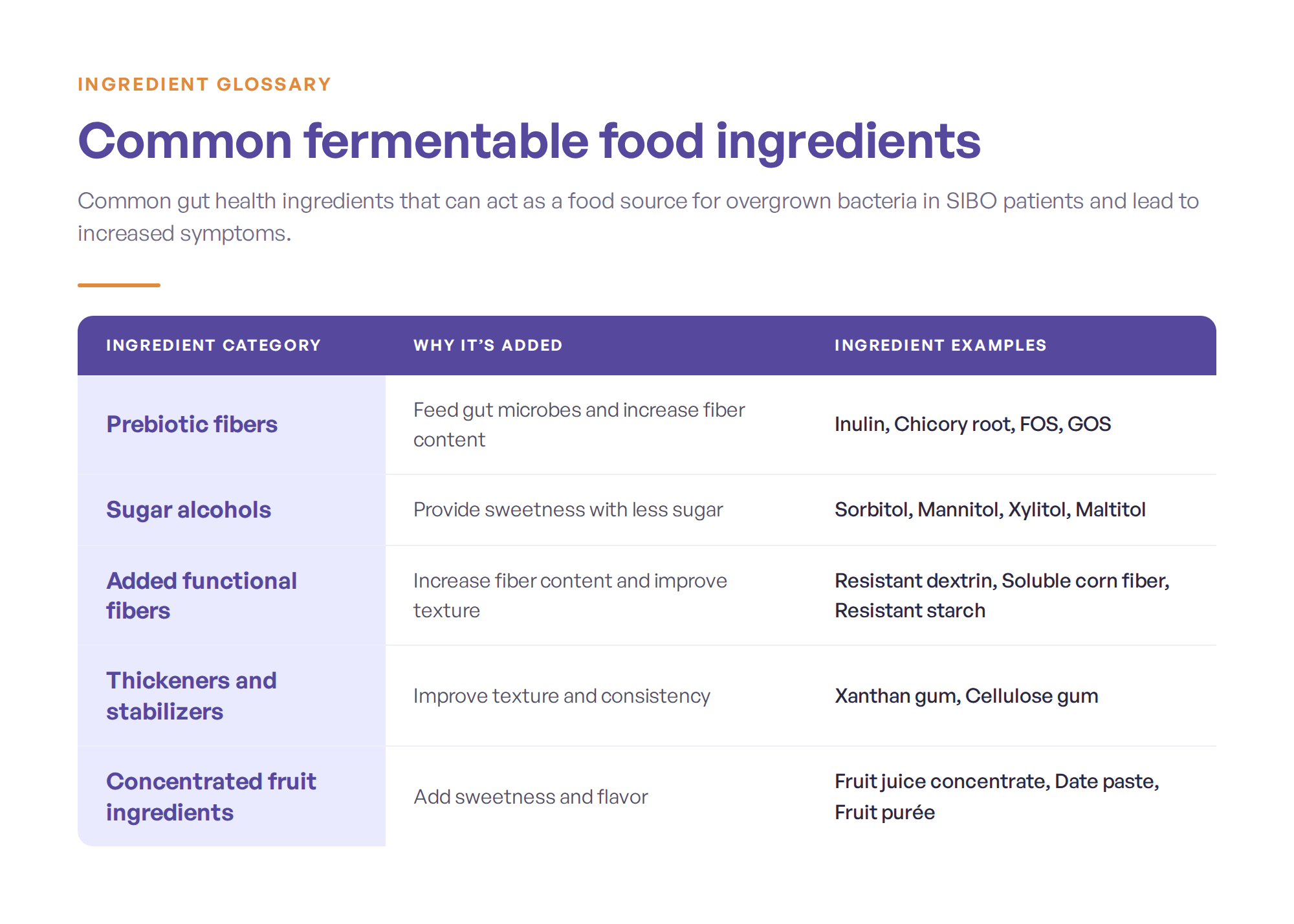
Rather than trying to memorize dozens of ingredient names, focus on recognizing a few common ingredient categories that may be more likely to affect your symptoms. You do not have to avoid every product that contains these ingredients. The goal is simply to recognize them so you can make more informed choices based on your own symptoms and the recommendations of your healthcare team.
The table below summarizes some of the ingredient categories you are most likely to encounter on packaged food labels. Note that FOS stands for fructooligosaccharides and GOS for galactooligosaccharides.
A Note About Other Ingredients
Managing SIBO is about understanding how your body reacts to different foods. Not every ingredient on a food label affects SIBO through fermentation. Some ingredients have attracted attention because researchers are studying how they may interact with the gut microbiome or the intestinal lining.
Unlike fermentable fibers, these ingredients are not currently considered established triggers of SIBO symptoms. However, because everyone’s digestive system is different, some individuals choose to monitor whether products containing these ingredients increase their symptoms. Some examples of these ingredients include:
Carrageenan is a thickener used in some dairy products and plant-based beverages. Animal and laboratory studies have raised questions about its effects on the intestinal lining, but evidence in humans remains limited.
Emulsifiers, such as polysorbate 80 and carboxymethylcellulose, are being studied for their potential effects on the gut microbiome and the intestinal barrier. Much of this research is still emerging.
Artificial sweeteners, including sucralose, have also been investigated for possible effects on the gut microbiome, although findings have been mixed.
Foods That May Surprise You
Many packaged foods are formulated to increase fiber, provide prebiotics, or reduce added sugar. As a result, ingredients such as prebiotic fibers and added functional fibers have become increasingly common. The examples below are not foods you necessarily need to avoid, they simply illustrate the types of foods where these ingredients are often found. Knowing these categories can help you remember when it is more important to review a food label.
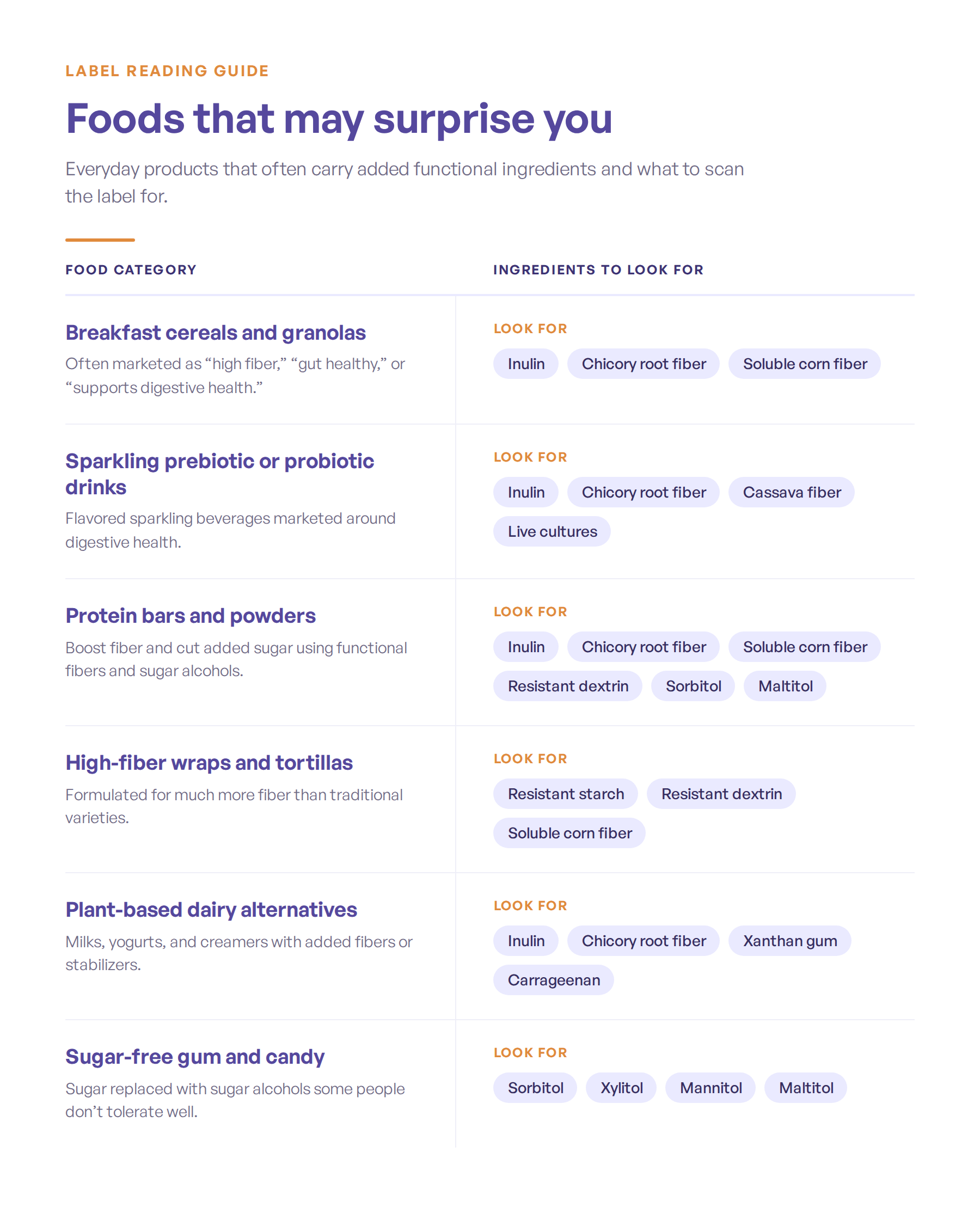
Everyday products which often carry added functional ingredients
Your Guide to Reading Food Labels
No one wants to spend hours looking at every food label during a regular grocery shop. Reading food labels does not have to be complicated or time consuming. Before putting a packaged food into your cart, follow these simple steps to make sure what you put in your cart is good to put into your digestive system:
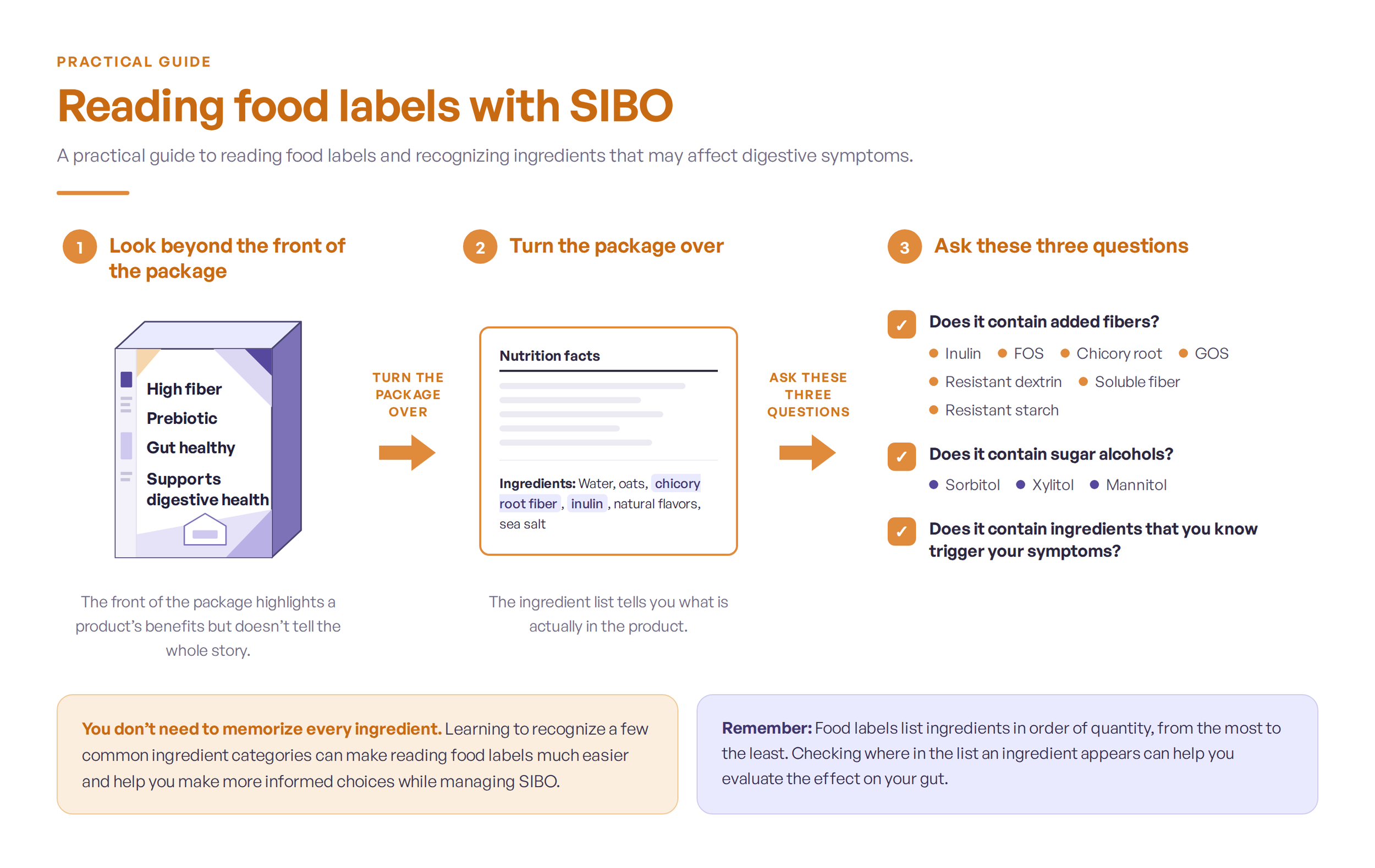
Reading food labels and recognizing ingredients that may affect SIBO symptoms
The Takeaway
Reading food labels is a skill, and like any skill, it becomes easier with practice. Over time, you’ll begin to recognize common ingredient names and identify the products that work best for you. Rather than focusing on avoiding long lists of foods, focus on becoming a more informed shopper and paying attention to how your own body responds.
Remember that many of the ingredients discussed in this article are included in foods because they offer genuine health benefits for the general population. The goal is not to label these ingredients as “good” or “bad,” but to understand how they may affect your digestive system while you’re managing SIBO.
Because everyone’s symptoms, nutritional needs, and treatment plans are different, consider working with your healthcare provider or a registered dietitian to develop an approach that supports both symptom management and long-term nutritional health.
Key References
Bellini, M., Tonarelli, S., Nagy, A. G., Pancetti, A., Costa, F., Ricchiuti, A., de Bortoli, N., Mosca, M., Marchi, S., & Rossi, A. (2020). Low FODMAP diet: Evidence, doubts, and hopes. Nutrients, 12(1), 148. https://doi.org/10.3390/nu12010148
Black, C. J., Staudacher, H. M., Ford, A. C., & Moayyedi, P. (2022). Efficacy of a low FODMAP diet in irritable bowel syndrome: Systematic review and network meta-analysis. Gut, 71(6), 1117–1126. https://doi.org/10.1136/gutjnl-2021-325214
Bogdanowska-Charkiewicz, D., Górski, P., Jurkowska, G., Środa, R., Świdnicka-Siergiejko, A., Dąbrowski, A., & Daniluk, J. (2026). Effectiveness of the low FODMAP diet in patients with irritable bowel syndrome and small intestine bacterial overgrowth syndrome. Frontiers in Nutrition, 13, Article 1725524. https://doi.org/10.3389/fnut.2026.1725524
Gibson, P. R., & Shepherd, S. J. (2010). Evidence-based dietary management of functional gastrointestinal symptoms: The FODMAP approach. Journal of Gastroenterology and Hepatology, 25(2), 252–258. https://doi.org/10.1111/j.1440-1746.2009.06149.x
Lomer, M. C. (2024). The low FODMAP diet in clinical practice: Where are we and what are the long-term considerations? Proceedings of the Nutrition Society, 83(1), 17–27. https://doi.org/10.1017/S0029665123004239
Velasco-Aburto, S., Llama-Palacios, A., Sánchez, M. C., Ciudad, M. J., & Collado, L. (2025). Nutritional approach to small intestinal bacterial overgrowth: A narrative review. Nutrients, 17(9), 1410. https://doi.org/10.3390/nu17091410